
Some food for thought…
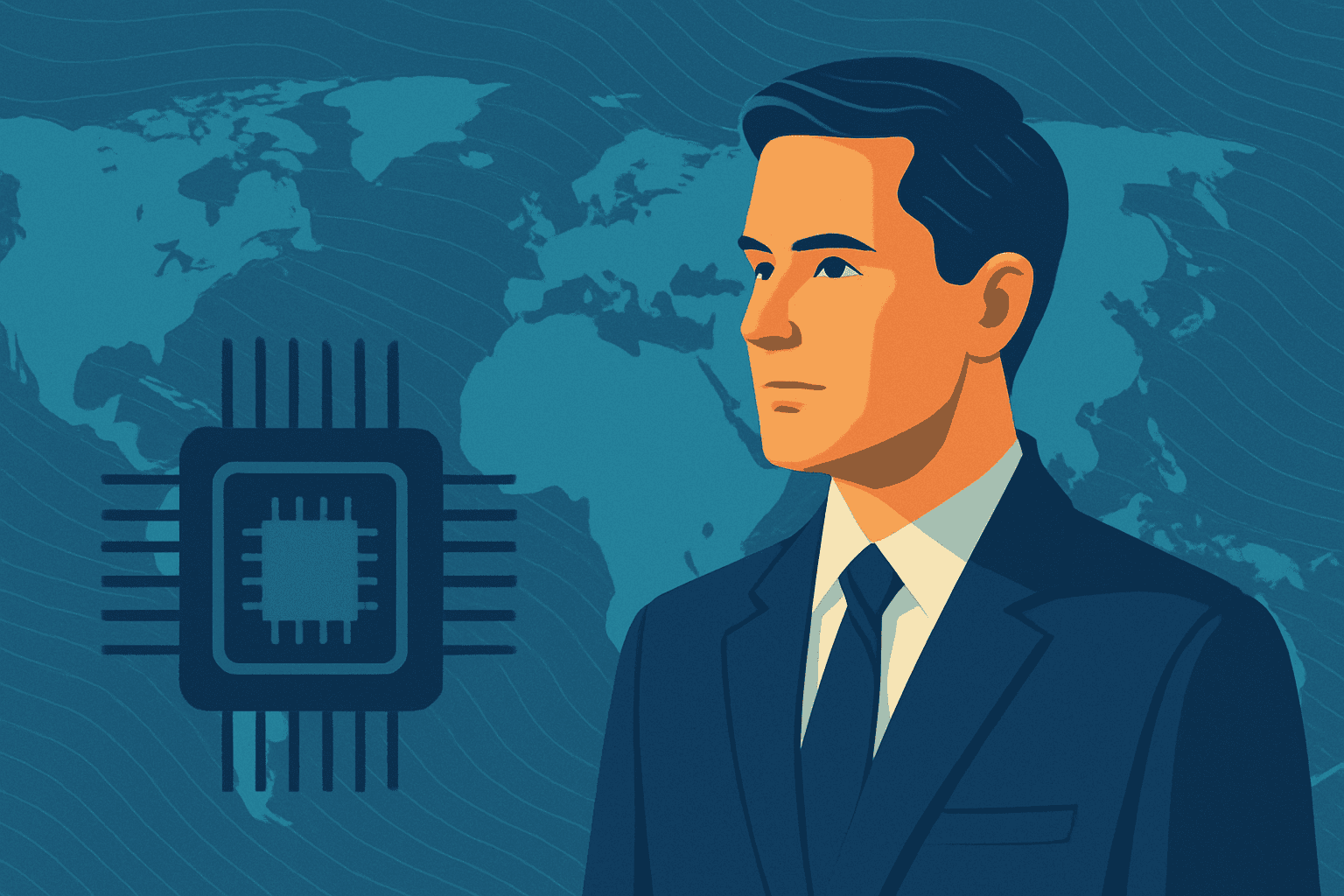
Immigration is the defining political topic of elections across the world. Nations are struggling to decide who gets to enter, who gets to stay, and who gets access to the opportunities and resources within their borders. But while we debate the movement of human beings across physical boundaries, an entirely new class of immigrants is pouring across our digital borders—quietly, rapidly, and without a single checkpoint.
I’m talking about digital immigrants: AI agents capable of Nobel-level reasoning, superhuman memory, and cognitive output at a speed and cost no human can match.
Think about this for a moment.
These digital immigrants don’t need visas, work permits, housing, transportation, healthcare, or even sleep. They can perform cognitive labor—analysis, research, writing, strategic planning, creative work—24 hours a day, 7 days a week, and at a cost that falls below minimum wage in every country on Earth.
They are arriving faster than any labor class in human history.
And they are not coming as a possibility. They are coming as a certainty.
So the real question becomes:
Are We Ready for This New Wave of Immigration?
We already know how societies react when humans compete for limited jobs, opportunities, and resources. But what happens when the competition is not another person—but an intelligence that scales infinitely?
- What happens when the most in-demand worker is not offshore… but off-human?
- What happens when "work" itself becomes a negotiable concept?
- What happens when every business—from a solopreneur to a global enterprise—can deploy a full team of digital workers instantly and cheaply?
And perhaps most importantly:
What happens to us?
The New Economics of Intelligence
For centuries, economies have been anchored around the scarcity of human talent. Expertise took decades to build. Knowledge was earned. Skill was a competitive moat.
But AI agents flip that economics completely:
- Expertise becomes abundant, not scarce.
- Knowledge becomes instant, not earned.
- Labor becomes infinite, not limited.
- Productivity becomes exponential, not linear.
In this new world, the competitive edge no longer comes from what you know—or even how hard you work.
It comes from how intelligently you orchestrate the intelligences available to you.
Humans who learn to lead AI will thrive. Humans who try to compete with AI will not.
This shift is more profound than the Industrial Revolution, the internet, or globalization. It doesn’t just change industries—it changes the fundamental assumptions about what it means to be employable, valuable, or economically relevant.
The Ethical and Political x-Factor
If debates over human immigration can destabilize political systems, imagine the intensity of debates over digital immigration:
- Should AI agents have limits on the types of work they can perform?
- Should nations regulate the “importation” of foreign AI models?
- Should companies pay an “automation tax” for replacing human workers?
- Should AI contributions count as GDP?
- Should humans be guaranteed a minimum economic floor in a world where most cognitive work is automated?
These questions are coming. And they’re coming fast.
Because unlike human immigrants, these newcomers don’t need permission to enter.
They’re already here.
Humanity’s Role in the Age of Digital Immigrants
Here’s the truth:
AI is not here to replace humans. AI is here to replace human limitations.
But whether this becomes humanity’s greatest leap forward or its greatest existential crisis depends entirely on our ability to adapt, evolve, and redefine what it means to contribute value in a world where intelligence is no longer a bottleneck.
The winners of the next decade will not be the strongest or the most knowledgeable.
They will be the most adaptive, the most curious, and the most capable of integrating human insight with machine capability.
In other words:
The leaders of tomorrow will be those who master the art of collaboration with their digital immigrant workforce.
Are We Ready?
This is no longer science fiction. This is the world unfolding right now.
And while governments debate physical borders, the digital borders—if they ever existed at all—have already been erased.
So the final question is the same one we began with:
Are we ready for a world where the newest, fastest-growing class of workers are not human at all?
Because ready or not…
They’ve already arrived.